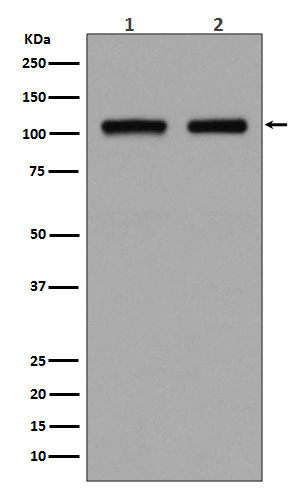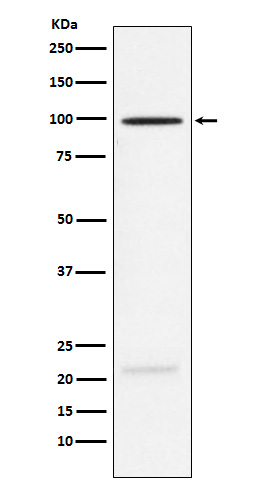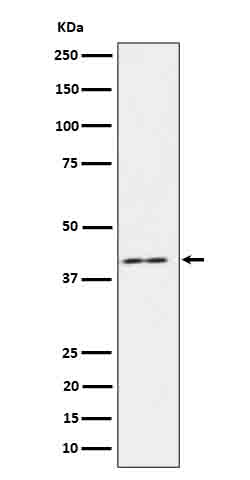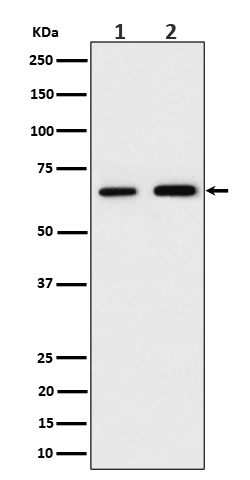
别名HEP-NOS; Hepatocyte NOS; Inducible NO synthase; Inducible NOS; iNOS; NOS2;
应用WB;ICC/IF;IP
反应物种Human;Mouse
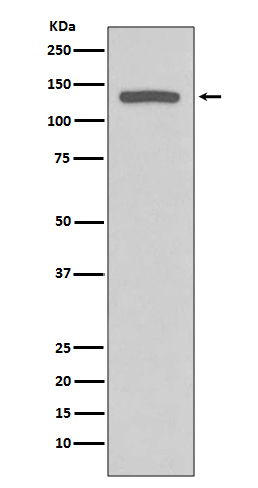
理论分子量131 kDa
表观分子量131 kDa
免疫原A synthetic peptide of human NOS2
基因ID4843
蛋白编码P35228
宿主物种Rabbit
抗体分型IgG
纯化Affinity purification
储存Store at -20℃. Avoid freeze / thaw cycles.
靶点背景iNOS (Inducible Nitric oxide, NO, NOS) is an inorganic, gaseous free radical that carries a variety of messages between cells. Vasorelaxation, neurotransmission and cytotoxicity can all be potentiated through cellular response to NO. NO production is mediated by members of the nitric oxide synthase (NOS) family. iNOS is expressed in liver and inducible by a combination of lipopolysaccharide and certain cytokines. NOS catalyzes the oxidization of L-arginine to produce L-citrulline and NO. Two constitutive isoforms, brain or neuronal NOS (b or nNOS, type I) and endothelial cell NOS (eNOS, type III), and one inducible isoform (iNOS, type II), have been cloned. All NOS isoforms contain calmodulin, nicotinamide adenine dinucleotide phosphate (NADPH), flavin adenine dinucleotide (FAD), and flavin mononucleotide (FMN) binding domains. iNOS is found in a variety of cell types including macrophages, hepatocytes, synoviocytes, and smooth muscle cells. Cytokines such as interferon-gamma (IFN), tumor necrosis factor (TNF), interleukin-1 and -2, and lipopolysaccarides (LPS) cause an increase in iNOS mRNA, protein, and activity levels. Protein kinase C-stimulating agents exhibit the same effect on iNOS activity. After cytokine induction, iNOS exhibits a delayed activity response which is then followed by a significant increase in NO production over a long period of time. Three related iNOS pseudogenes are located within the Smith-Magenis syndrome region on chromosome 17. Diseases associated with iNOS dysfunction include achalasia and impotence.
推荐稀释比WB 1:1000-1:2000 ICC/IF 1:50-1:200 IP 1:20-1:50
产品形式Liquid
Buffer 体系PBS with 1% BSA, 0.03% Proclin300 and 50% Glycerol.